Front Row or Further Back: Choosing What to Hear
Concert seat choice can shape what you notice in live music. Match your position to the room, stage layout and musical details you want to follow.
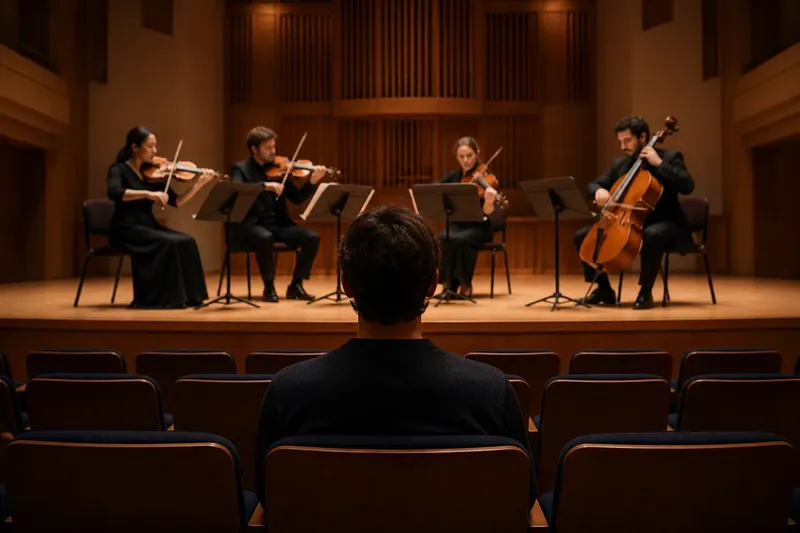
Which concert seat will help you hear what you came for? The answer depends on the room, the way the performers are arranged and the kind of musical detail you want to follow. A seat changes the balance between direct sound and the room’s response, so the same performance can feel different from one position to another.
Read the room layout
Start with the seating plan, not a general rule about sitting close or far away. Check where the stage sits in relation to the audience, whether it is raised, and whether the performance uses loudspeakers. In an amplified concert, speaker placement can matter more than the distance between you and a performer.
Look for obstructions and unusual angles. A pillar, balcony overhang or sharply angled side section may affect what you can see, while a seat far to one side can give you an incomplete view of the stage. If the venue has a seating view online, use it to check sightlines; for an uncertain seat, ask the box office about obstructions and the sound system.
Follow the sound path
Direct sound reaches you from the performers or loudspeakers, while reflected sound arrives after bouncing off surfaces in the room. Their balance influences how clearly separate parts register and how much the room seems to colour sustained notes. The effect varies with the venue’s shape, materials, audience and sound setup.
In a close seat, you may hear the start of a note or a quiet gesture distinctly, but parts from elsewhere on the stage can feel less integrated. Further back, the ensemble may read more as a whole, though small details can be less prominent. These are listening tendencies, not promises: a room’s design can change the result.
Match position to music
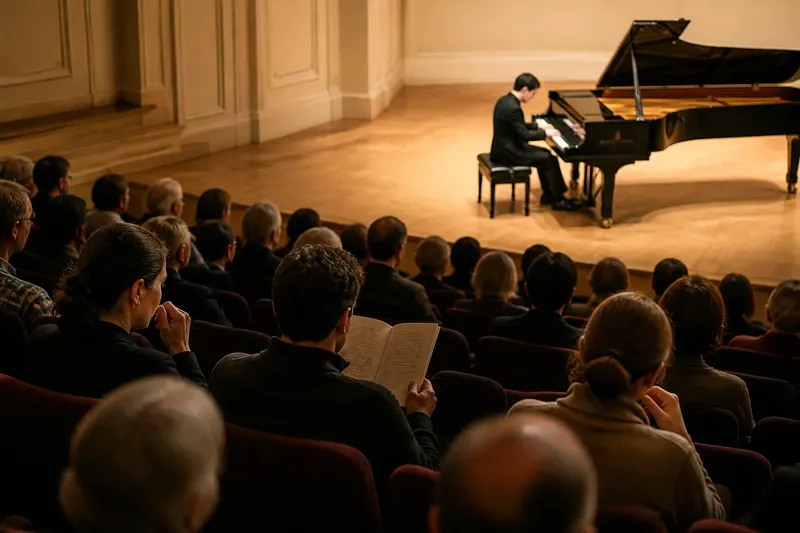
For a solo performer, a closer seat may bring breathing, articulation and physical gesture into view. If the event uses amplification, check whether loudspeakers face the whole audience; closeness to the stage does not necessarily mean a clearer vocal sound.
For a large or widely arranged ensemble, consider whether you want to follow one player or hear how the parts combine. A central position can make it easier to take in the arrangement across the stage. In a hall with a long reverberant tail, a seat with a clearer view of the loudspeakers or performers may help rapid passages remain distinct.
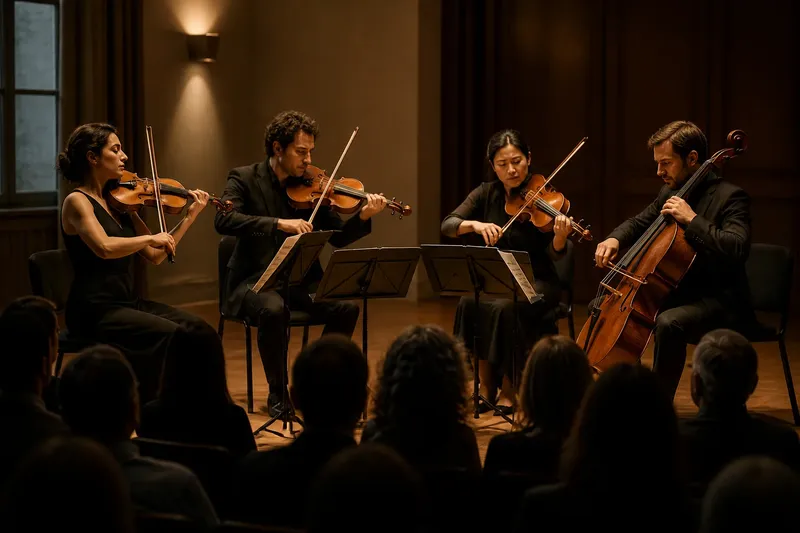
Say you are choosing between a side seat near a string quartet and a central seat farther back. You want to hear how the four parts fit together, and the seating plan shows no obstruction from the central section. Choosing that central seat is likely to give you a more unified view of the group; the trade-off is that small bow movements may be harder to see than from nearby.
Use these seat checks
- Check the stage view. If the seating plan shows a pillar or restricted sightline, choose an unobstructed section instead; if the view is clear, keep that seat in consideration.
- Check the speaker positions. If loudspeakers are aimed towards the central audience, favour a seat within that coverage; if the layout is unclear, ask the venue before deciding.
- Check the stage width. If performers are spread across a broad stage and you want to hear their parts together, choose a central position; if you want to follow one musician’s gestures, choose a seat with a clear view of that performer.
- Check the music’s texture. If the programme has rapid, intricate passages and the room is known to be reverberant, favour a position where the performers or speakers are easy to hear directly; if sustained sound is your priority, consider a position where the room’s resonance is more apparent.
- Check whether the performance is amplified. If it is, use speaker placement rather than stage distance as your main sound clue; if it is acoustic, consider how the room may carry sound from the performers.
- Check the venue’s advice. If staff identify a restricted view or a sound-system reason to avoid a section, choose another available seat; if they have no specific concern, decide according to the musical detail you most want to follow.
Which seat suits your listening?
Is a central seat always best?
No. It can give a balanced view of a wide stage, but a side seat may be more useful if you want to watch a particular performer. Check sightlines and speaker direction before treating the centre as a default.
Does sitting further back improve the blend?
It can make the ensemble feel more unified, but room acoustics and amplification also affect the result. A central position with a clear sound path is a better guide than distance alone.
How should I choose for an amplified concert?
Check where the loudspeakers are aimed and ask the venue if the seating plan does not make this clear. A seat within the speakers’ intended coverage may matter more than being close to the stage.
What should I ask the box office?
Ask whether a seat has an obstructed view and whether the sound system covers that section. If you are choosing between two positions, say whether you care more about seeing a particular performer or hearing the ensemble as a whole.
Choose with a purpose
Before booking, name the thing you most want to follow: a solo line, the exchange between players, the words of a song or the room’s response to sustained sound. Then use the seating plan and venue advice to find a position that supports that aim. This concert seat choice is about directing your attention, not finding a universally superior place.
If you know the venue, recall whether its sound felt crisp, resonant or strongly shaped by loudspeakers. If it is new to you, keep your decision flexible: a clear sightline and a position suited to the stage layout are useful starting points, while the room’s sound remains part of the evening’s character.