The Myth of the Perfectly Quiet Concert Audience
The perfectly quiet concert audience is a myth: learn to tell ordinary room sounds from distractions and stay attentive without policing other listeners.
What counts as a distraction at a concert, and when is a little noise simply part of listening together? The perfectly quiet concert audience is a myth: attention does not require every coat, breath or chair to disappear. A useful distinction is whether a sound belongs to the shared conditions of the room or keeps pulling attention away from the music.
Silence is not the measure
At a live performance, sound comes from more than the stage. A ventilation system may hum, floorboards may creak, and a listener may shift position. These noises are part of the room’s audible life, not evidence that the audience has stopped caring.
Attention is better understood as a relationship with the music. A listener can remain absorbed while noticing a cough or a programme page turning; equally, a completely still audience may be mentally elsewhere. The sound itself does not tell the whole story.
This matters because expecting absolute silence can make ordinary listening feel like surveillance. Once you start monitoring every movement around you, small sounds can become more prominent than the performance. The aim is not to ignore the room, but to avoid treating every audible detail as a breach of concert manners.
Room sounds have context
Listen for how a noise behaves. A single cough, the soft scrape of a seat or a brief rustle usually passes quickly. It may be noticeable in a quiet passage, then vanish from attention when the music gathers force. That change in prominence is normal: a room can seem louder when the performers leave space.
Some sounds are continuous rather than intrusive. Air circulation, traffic beyond the walls or a faint mechanical buzz may sit beneath the music throughout the evening. Once recognised, these sounds can become part of the room’s background rather than demands for attention.
Concert halls also differ in how they reveal small noises. A close, reflective room may make a page turn seem unusually clear; a larger or more absorbent space may soften it. The same sound can therefore feel prominent in one seat and barely register in another. That is a feature of where and how sound travels, not a reason to judge the person who made it.
When noise interrupts
A distraction is less about a sound’s mere existence than its effect. Repeated conversation, a phone alert, or a sustained rustle during a quiet passage may keep drawing attention back to itself. The difference is often persistence: the sound returns, continues or carries meaning that competes with the performance.
Even then, the listener’s response need not be a verdict on someone else. People may have different reasons for moving or making noise, and a brief disruption rarely reveals enough to know what is happening. Staying with the music, shifting attention to another instrument, or allowing the sound to pass can be more useful than deciding who is at fault.
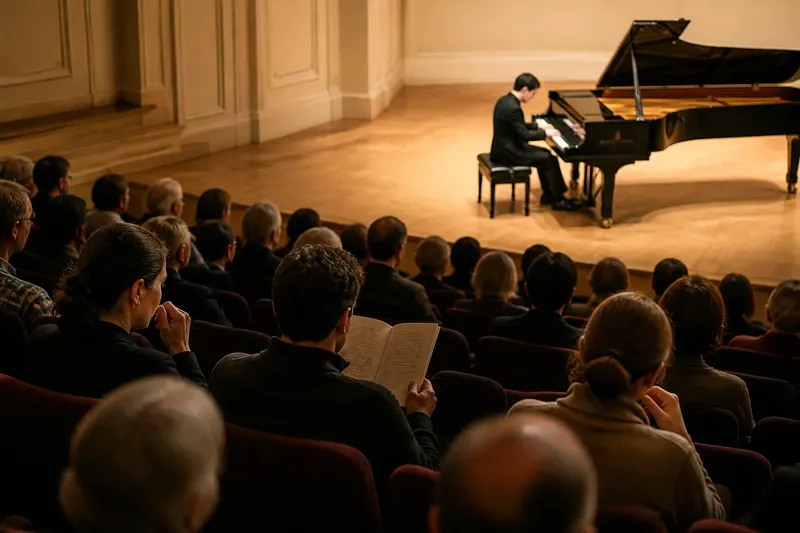
Say you are listening to a solo piano work and a programme page rustles once during a pause. You notice it, then follow the pianist’s next quiet phrase as it begins. The sound has interrupted the moment briefly, but it has not taken over your attention or become a reason to monitor the person beside you.
Attention without policing
There are practical ways to keep listening without turning the audience into a problem to solve:
- Follow a musical line. Choose a melody, bass figure or recurring rhythm and notice where it goes after a room sound catches your ear.
- Use the next entrance. If your attention drifts, listen for the next instrument or voice to join rather than replaying the interruption in your mind.
- Let brief sounds pass. A cough or movement may be startling, but it usually ends without requiring a response.
- Keep your attention local. Notice what you can hear from your seat rather than guessing how the whole audience is behaving.
- Choose a discreet response to a persistent disruption. If conversation or a device continues, a quiet word to an usher during an appropriate pause may be less distracting than confronting another listener.
These are options, not tests of good listening. Some people concentrate by following the score; others attend to tone, rhythm or the changing balance between performers. A sound may briefly unsettle one listener and barely reach another. Neither response proves that one person is more attentive.
Quiet passages and expectation
Silence within music can make the surrounding room newly audible. A rest, a fading note or an exposed solo leaves less sound to mask movement. The audience may seem suddenly noisy even if nothing has changed. Recognising this shift can prevent a quiet passage from becoming a search for someone to blame.
Performers also shape the room’s attention. A held pause can invite listeners to wait; a gradual entrance may draw the ear towards a faint sound on stage. The audience’s stillness can contribute to that shared focus, but it is not the only sign that people are listening. Concentration may be visible in stillness, yet it can also coexist with an unavoidable cough or a careful adjustment in a seat.
Applause, laughter and an audible response are different from accidental noise: they are ways an audience communicates. Their timing depends on the setting and the music, so a listener can follow the room’s cues without treating every sound as either correct or incorrect. Listening together includes moments when the audience becomes audible.
Questions about audience noise?
Is coughing during a concert rude?
A cough is a bodily sound, not a reliable sign of disrespect. If you need to cough, a quiet, brief response is considerate where possible, but listeners do not need to judge one another for an unavoidable sound.
Should I confront someone who is talking?
For a short remark, it may be simplest to return your attention to the performance. If conversation continues and disrupts nearby listening, consider speaking quietly to an usher at a suitable moment rather than escalating the exchange.
Why do small sounds seem louder in some passages?
When the music becomes soft or pauses, there is less musical sound to mask movement in the room. The noise may not have grown louder; the contrast has changed.
Does a quiet audience always mean people are engaged?
No. Silence can accompany close listening, but it can also be a matter of habit or expectation. Attention is individual and cannot be measured simply by how still a room appears.
Listening as a shared space
The perfectly quiet concert audience is not a realistic standard, and it can distract from the music by turning ordinary sounds into evidence to assess. A more useful practice is to notice what a sound does: whether it passes, settles into the background or keeps interrupting your listening.
That distinction leaves room for consideration without demanding silence from every person in the hall. When a sound is brief, return to the music; when a disruption persists, choose a calm and discreet way to respond. Attention can be shared even when the room is not mute.