Before the Set List: How Concert Programmes Took Shape
Concert programmes developed from brief notices into guides to works and performers; learn how to read their history and use one to follow a live concert.
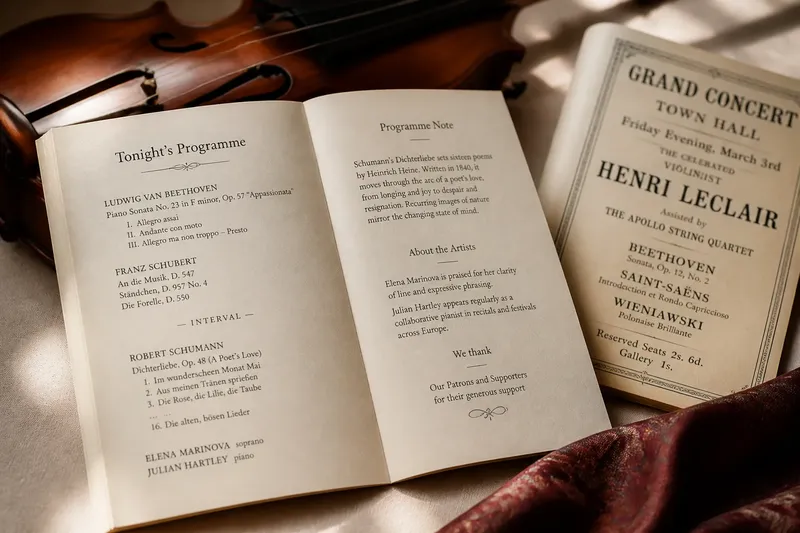
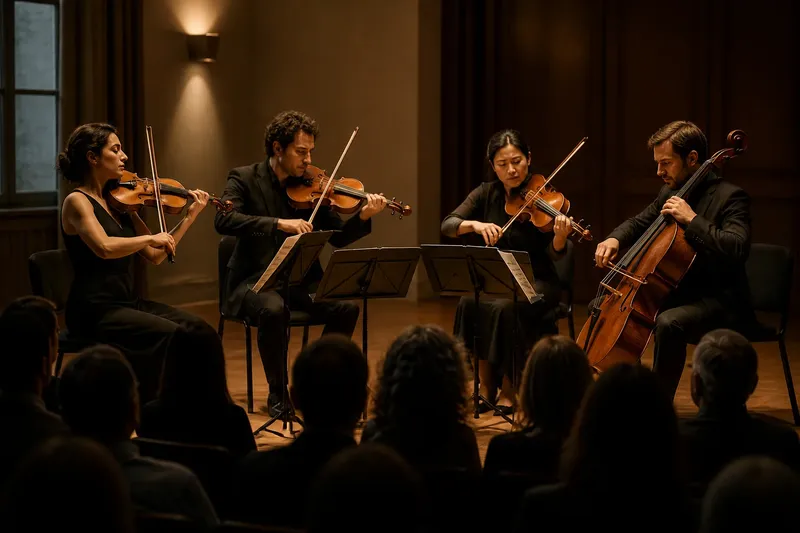
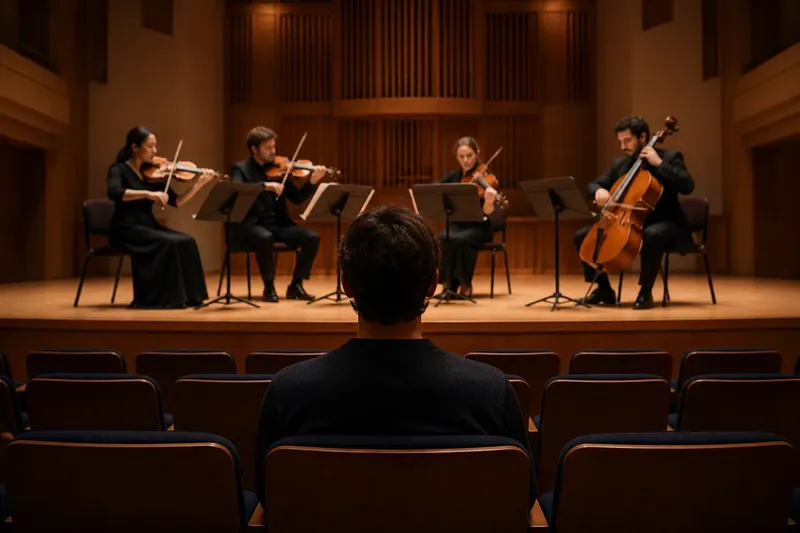
How did concert programmes become the guides audiences use to follow a live performance? Concert programmes grew from practical announcements into printed records of what would be played, who would perform and how an event was framed. Their history follows changes in concert life: as public performances became more planned and repeatable, audiences needed clearer ways to identify the music and its order.
From notices to programmes
Before the detailed booklet became familiar, audiences might learn about a performance through a handbill, newspaper notice or announcement. Such material could advertise the event and name a performer or featured work without offering a full account of the evening. Its purpose was often to bring people to the venue and communicate essential details.
As concerts took on more regular formats, a printed list of works became useful inside the hall as well as outside it. It could show the sequence, identify performers and mark an interval. That information helped listeners distinguish one item from the next, especially when a concert included several works or a larger composition with multiple sections.
This change was not a simple march from short notices to ever-longer explanations. A programme’s form depended on the event. A recital might need little beyond a sequence and performer names; a festival or institutional concert could include biographies, notes, acknowledgements and advertisements. Practical needs and editorial choices shaped what audiences received.
Changing concert habits
When concerts were organised around a named performer or a particular occasion, the printed material could make that identity visible. A programme might foreground the soloist, the ensemble, a commemorative event or a group of works connected by composer or theme. The page did more than list music: it offered an account of what the organisers thought held the evening together.
Over time, notes and biographies gave some programmes a more explanatory role. They could introduce unfamiliar composers, clarify a work’s structure or place a performance in a broader context. But explanation was never the sole purpose. A printed schedule still had to help people know what was happening, when performers changed and where an interval fell.
Concert practice also leaves room for variation. The sequence in a booklet can change, a performer can be replaced, or a venue can distribute updates separately. The programme records an intended event, while announcements and notices may record what actually happens that evening.
What does the programme reveal?
Read the printed object as both a map and a frame. The running order shows the planned sequence; the title, notes and acknowledgements show how the organisers present the music. Neither tells you exactly how the performance will sound, but together they can help you understand the event’s shape.
- Check whether the running order includes an interval; if it does, use it to anticipate a break, and if it does not, avoid assuming that the printed list marks one.
- Check whether movements or individual songs are listed; if they are, use the entries to follow the work’s sections, and if they are not, listen for changes in texture or pace without searching the page.
- Check which performers are matched to each work; if roles are clear, use them to identify who is playing or singing, and if they are not, consult a venue notice or listen for an announcement.
- Check whether a note explains an unfamiliar term; if it does, read that passage before the performance or at the interval, and if it does not, leave the explanation for later rather than interrupting your listening.
- Check for a notice about a substitution or revised order; if one appears, follow the update, and if none appears but the stage information differs, treat the live announcement as current.
- Check whether the concert title links the works by a theme or occasion; if it does, keep that connection in mind as a possible frame, and if it does not, let the music suggest its own relationships.
Reading concert programmes today?
Why did programmes become more detailed?
As concerts became organised around planned sequences and recognisable performers, audiences benefited from having the works and their order in one place. Some organisers added notes and biographies, while others kept the programme chiefly practical.
What is the difference between a handbill and a programme?
A handbill commonly advertises an event and its essential details, while a concert programme is intended to identify the music and help an audience follow the performance. The boundary is not absolute: a single printed item can serve both purposes.
Should you read the notes during the music?
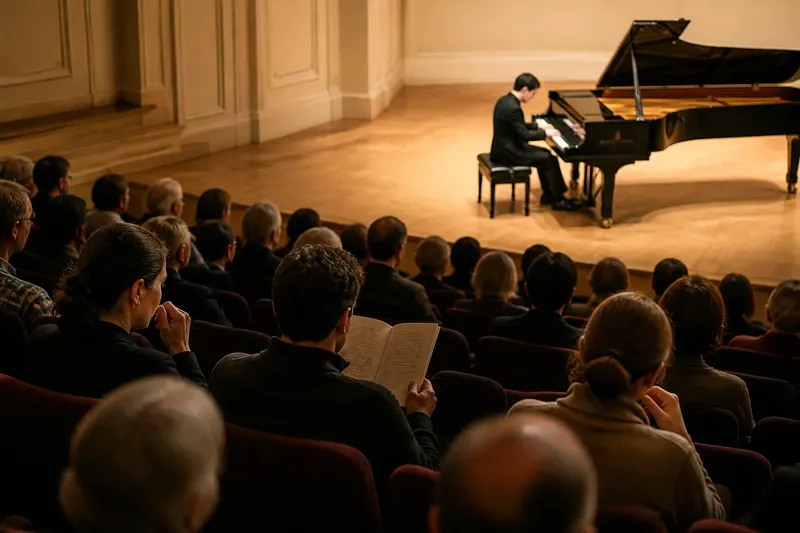
Read them beforehand or during a pause if they help you recognise a form, instrument or recurring idea. If looking down would pull your attention from the performance, set the page aside and return to it later.
What if the printed order changes?
Check venue notices and listen for an announcement, since a paper programme may have been prepared before a change was made. Follow the updated information rather than trying to reconcile the discrepancy while the music is playing.
Notes, roles and context
Programme notes are most useful when they clarify something you want to notice. They may explain that a movement is one section of a larger work, or that recitative is speech-like singing used to carry a dramatic exchange. Such definitions provide bearings without dictating what a listener must hear.
Names also need context. A list may distinguish a soloist from an ensemble, identify a conductor or show that a pianist accompanies a singer. Match each role to the relevant work rather than treating the cast list as decoration. If a performer changes, a notice or spoken announcement can bring the printed information up to date.
Imagine you arrive at a recital with a printed programme listing a song cycle, a singer and a pianist, plus a note about images that recur across the songs. You read the sequence before the music, then leave the note until the interval. When an image returns later, you recognise the connection without turning pages during the performance; the programme has prepared your attention while leaving the singing to make its own impression.
Paper and digital versions
A printed booklet is easy to consult without lighting a screen, while a digital programme on a venue website or through a QR code may be easier to enlarge or search. Either can provide the same basic information, though updates may appear in one format before another. Choose whichever is least distracting in the room.
After the concert, keep the composer, work title and performers together if you want to find the music again. A photograph of the repertoire page can serve as a record; add a note if the order changed or a substitute appeared. The most useful programme is not necessarily the longest one: it is the one that helps you recognise what is happening, then lets you return your attention to the sound.