How to Listen to Sound at Your First Concert
Learn how to listen to sound at your first concert by following a musical detail, making sense of unfamiliar acoustics and choosing when to adjust.
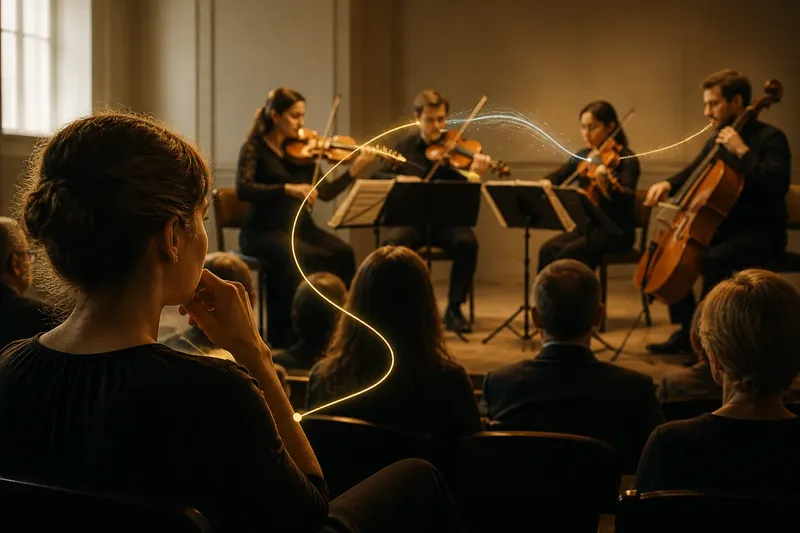
How do you listen to sound at your first concert when the music feels unfamiliar? Start with one audible detail, such as a melody moving between players or a rhythm changing shape, and follow how it behaves. You do not need to know the names of every instrument to notice what the room and performers are doing.
Sound before labels
Live sound can differ from a recording because you hear instruments together in a particular room, rather than through a fixed mix. A voice may blend into the ensemble, a quiet instrument may emerge in one passage, or a note may linger after it is played. These are observations, not signs that you are listening incorrectly.
Try describing what reaches you in plain language: a sound is clear or blended, close or distant, steady or wavering. Then listen for whether that quality changes. Naming what you hear gives your attention something specific to return to without requiring technical vocabulary.
Follow one detail
Choose a feature that is easy to recognise by ear. You might follow the pulse, the shape of a singer’s phrases, a repeated bass note or a tune passed from one instrument to another. Let other sounds remain in the background; listening closely to one strand does not mean ignoring the rest of the performance.
If your chosen feature disappears, notice what takes its place and wait to hear whether the original returns. You can also change focus between pieces. A steady rhythm may offer a clear thread in one work, while a contrast between quiet and loud passages may be easier to follow in another.
When does the sound change?
Why does live music sound different from a recording?
A recording presents a set balance through speakers or headphones, while a live performance reaches you directly from performers and the room. The sound can shift as players move, instruments change roles or the music grows quieter or louder.
What should I listen for first?
Pick a feature you can hear without needing to identify it precisely: a repeated beat, a rising tune or the contrast between one voice and a group. Follow that feature for a passage, then notice what changes around it.
What if I cannot distinguish the instruments?
Listen instead for what the sounds do: one may sustain a note while another makes short, quick sounds. The programme can help identify instruments during an interval, but you can still follow their patterns without knowing their names.
When should I ask to move?
If a persistent local noise or obstruction is making it hard to listen, speak quietly to an usher at a suitable moment and ask whether another place is available. If the sound is simply unfamiliar, give it time and try following a different musical detail before deciding to move.
Respond to distractions
A brief sound from the audience or building can pull your attention away. When it passes, return to the musical feature you were following rather than trying to reconstruct everything you missed. If a sound continues and seems to come from nearby, consider whether it is appropriate to raise it discreetly with an usher; avoid crossing the room during a quiet passage.
- If a nearby conversation is brief, then return to the music once it stops; if it continues, ask an usher discreetly for help instead of confronting the speakers during the performance.
- If a rattling object sounds close to your seat, then check whether it stops when the surrounding movement ends; if it persists, tell an usher rather than trying to locate or handle it yourself.
- If one instrument seems hard to hear, then follow the rhythm or melody it contributes to the ensemble; if that remains difficult, shift attention to a clearer sound rather than assuming the whole performance is inaudible.
- If the room’s reverberation makes notes seem to overlap, then listen for the beginnings of phrases or repeated pulses; if the detail stays confusing, follow the overall rise and fall of the music.
- If your attention wanders, then return to one sound you can recognise; if it does not come back, choose a new feature at the next passage or piece.
- If the volume feels uncomfortable, then use any ear protection you brought and consult venue staff about available options; if you need to leave, follow the venue’s arrangements and return when appropriate.
Read the room through sound
As the performance continues, notice how the sound behaves across different passages. A note that lingers may be easier to hear after a pause; a dense passage may make individual lines harder to separate. Compare these moments without deciding that one is better. The contrast itself can show how performers shape texture, or how the room lets sounds blend.
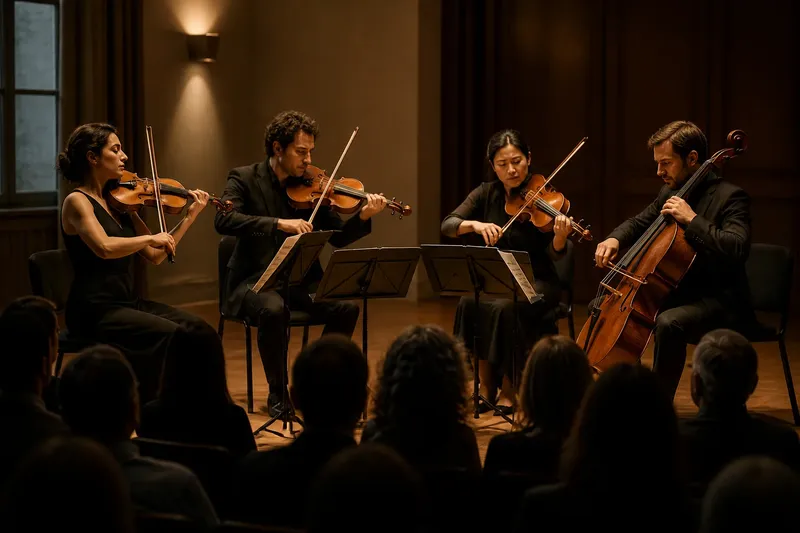
Imagine you are at a chamber concert and cannot tell which player carries the tune. You hear a short phrase repeated by a higher sound, then notice a lower instrument answering it. You decide to follow the exchange rather than identify every instrument; when the answer returns later, you recognise the musical relationship even though the tune has moved. That gives you a clear thread through the passage without requiring a technical explanation.
Use the programme lightly
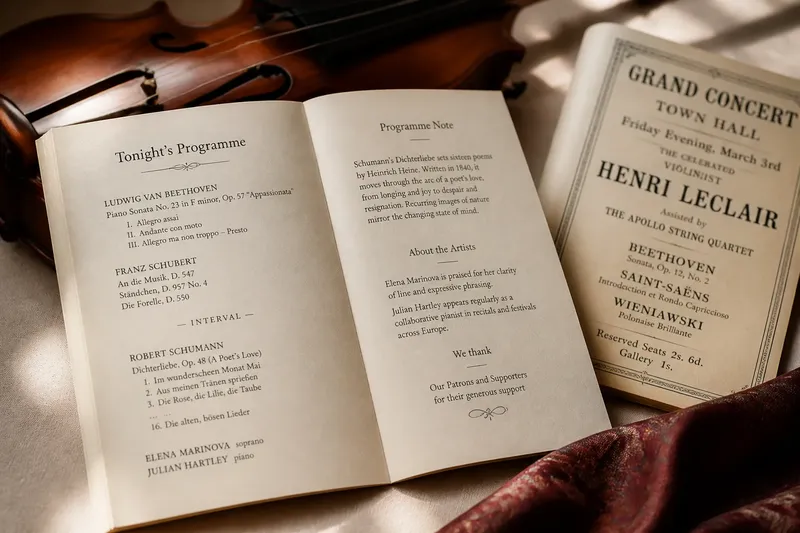
A programme can connect what you hear with names of performers, instruments or pieces. Read it before the music or during an interval if you prefer not to look away while listening. Treat it as a source of clues, not a set of instructions about what you ought to notice.
After a piece, you might recall one sound that stayed with you and one change you noticed. The next time you listen to sound at your first concert—or return to a familiar venue—you can use that memory to choose a fresh detail to follow. A small, specific observation is often enough to make the next passage easier to enter.